
Learn more about START-PROF pipe stress analysis software
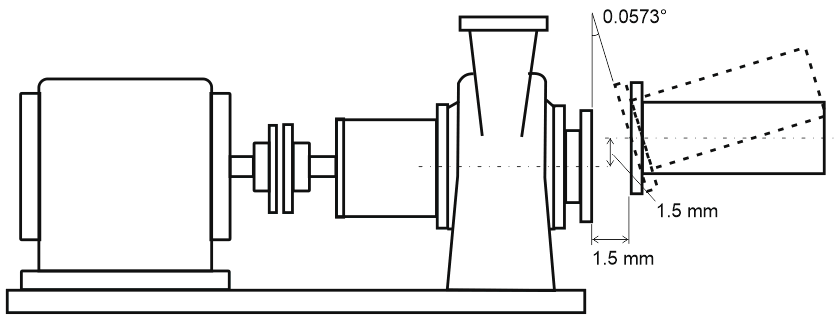
Equipment and piping flanges must align perfectly to prevent bolting issues. Misalignment between pipe and equipment nozzles—such as pumps, compressors, turbines, or other machinery—can cause installation difficulties and operational problems including excessive nozzle loads and vibration. Perform alignment checks on both inlet and outlet lines.
API RP 686 specifies piping-to-equipment alignment requirements:
Equipment manufacturers may provide additional alignment tolerances.
Create your piping model and verify all weights—including pipe, insulation, fluid, bends, valves, tees, reducers, and flanges.
Minimize force-controlled loads (weight, pressure thrust) on equipment nozzles using these steps:
Step 1: Zero Load Analysis
Create an "Alignment check" operation mode in the operation
mode editor. Set temperature to ambient and remove all support
movements and cold spring. Adjust the
model until nozzle loads are near zero. Use this mode to verify alignment
after each design change.
Enable "Remove Restraints for Hanger Selection" to exclude vertical restraints during spring sizing. This helps select springs that minimize nozzle loads. Fine-tune variable spring hangers to reduce vertical loads to zero.
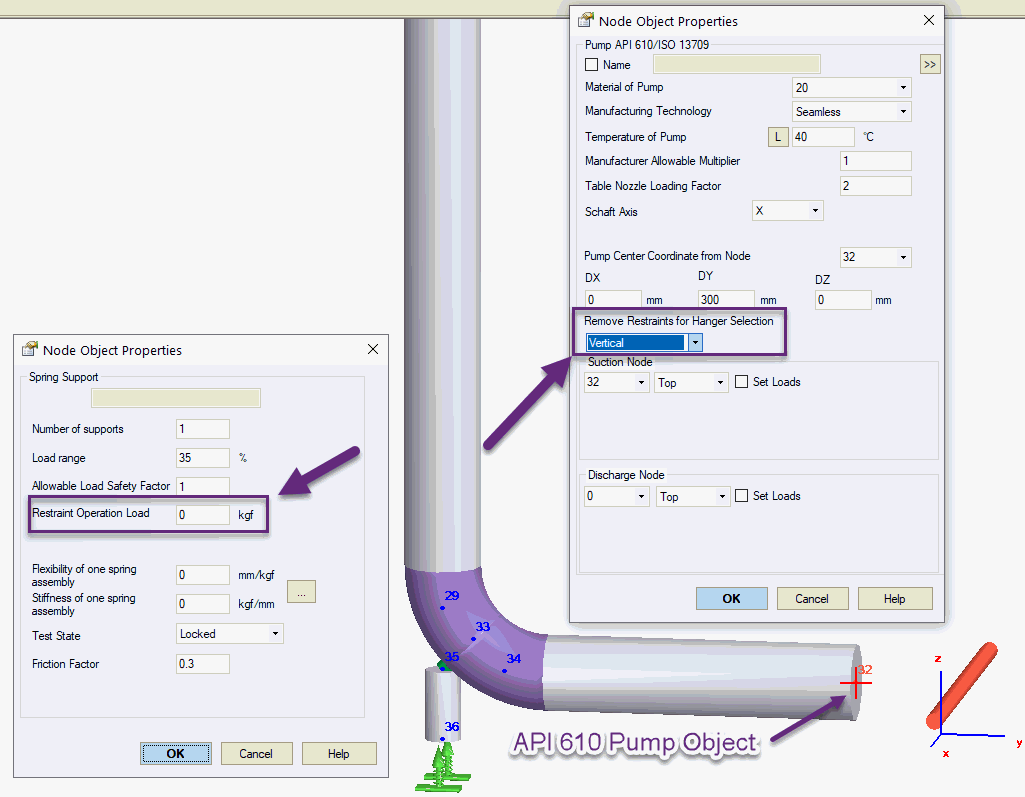
Step 2: Installation Alignment Check
Duplicate the model in a new project. Convert
springs to custom restraints. Replace the equipment nozzle with a
cap. Set temperature to ambient and remove support
movements and cold spring. This simulates conditions before bolting. Check
that displacements at the equipment node are within limits:
Use adjustable supports (e.g., variable spring hangers) near equipment nozzles to simplify alignment adjustments.