Learn more about START-PROF pipe stress analysis software
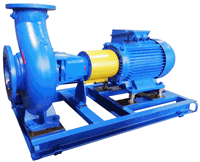
Model pumps and verify nozzle loads per ISO 5199. Each Pump object connects to one or two nodes. Load checks are performed for individual nozzles and the complete pump assembly.
View analysis results in the Loads on Nozzles and Equipment Table. See How to Reduce Nozzle Loads in START-PROF for optimization techniques.
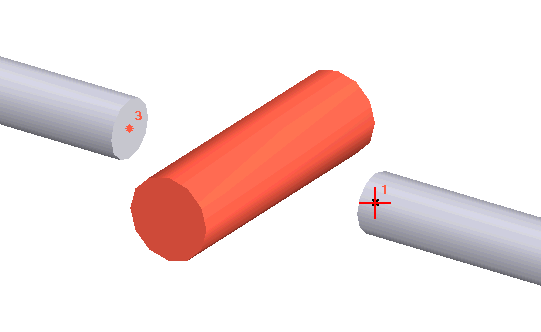
Method 1: Pipe End Nodes
Connect pump nozzles to pipe ends. Nozzles are modeled as fixed anchors
with automatic thermal expansion simulation.
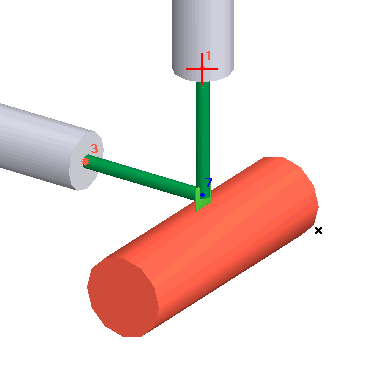
Method 2: Intermediate Nodes
Connect pump nozzles to intermediate nodes. Model the pump structure using
rigid elements,
cylindrical shells, and other components.
Thermal expansion is calculated through element properties.
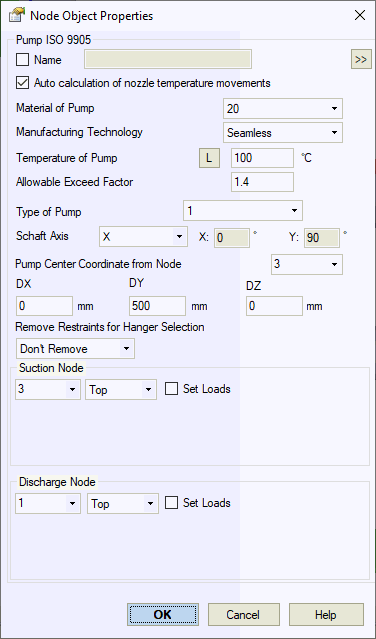
Property |
Description |
Name |
Element identifier. When checked, displays in 3D view. |
Auto calculation of nozzle temperature movements |
Automatically calculates nozzle movements as DX*α*(T-Ta), DY*α*(T-Ta), DZ*α*(T-Ta), where α is thermal expansion coefficient (from material properties), T is equipment temperature, Ta is ambient temperature, DX/DY/DZ are distances from pump center. Disable to specify movements manually. |
Material |
Material selection from materials database |
Manufacturing technology |
For ASME B31.1, ASME B31.3, DL/T 5366-2014, seamless pipe uses Wl=1.0. Electric-welded pipe Wl values come from database. Details... For GOST 32388-2013, pipe properties vary by type (seamless/welded) from different materials databases. |
Temperature |
Pump operating temperature. More information This
property is mode-specific. View values across all operation
modes using the |
Allowable Exceed Factor |
Default: 1.4. Adjust per manufacturer specifications.
|
Type of pump |
|
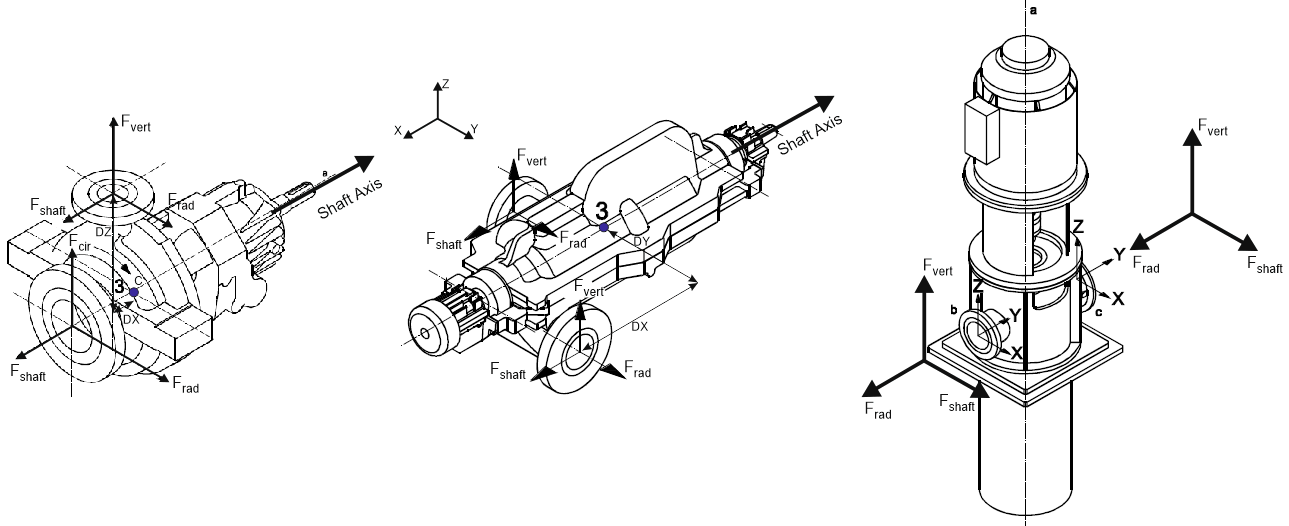
Fshaft Direction |
Shaft force direction (X-axis) per drawing:
|
Pump Center Point Offsets |
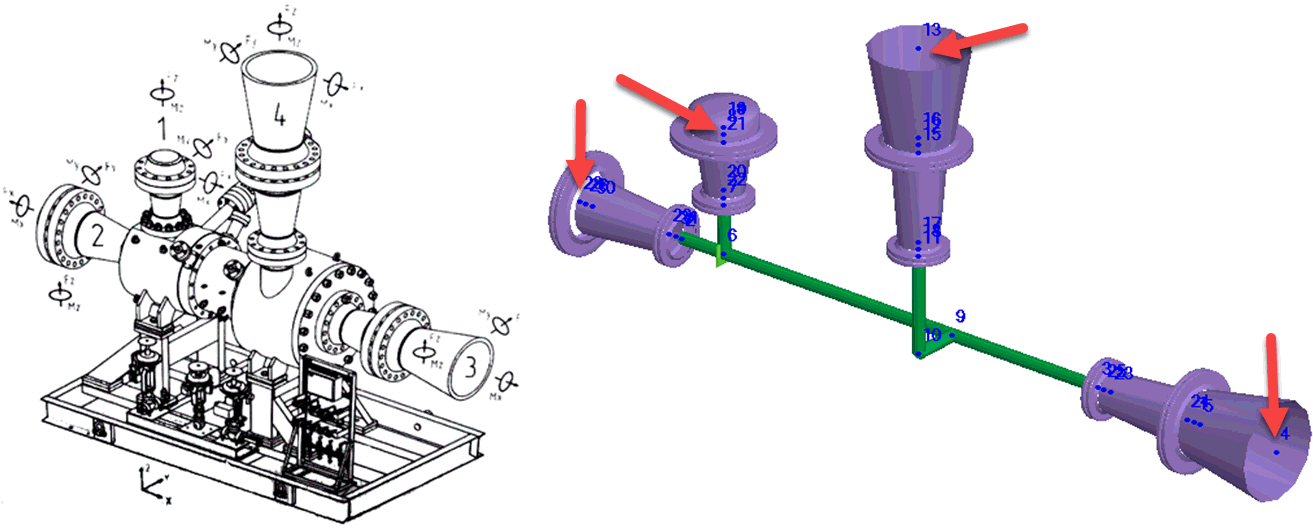
Reference node and offsets to pump center (point 3 in drawings above) |
Remove restraints for hanger selection |
Releases specified restraints during weight analysis for spring hanger selection. Restraints remain active in main analysis. This technique minimizes weight loads on nozzles by selecting springs that produce zero displacement under pure weight load.
|
Suction Nozzle Discharge Nozzle |
Node connection for suction and discharge nozzles. Specify nozzle orientation (Top, Side, End). For missing piping, select "Set Custom Loads" to input loads manually. |
Set Loads |
Apply manual loads to secondary nozzle when only one pump nozzle is modeled. Enables compliance checking per ISO 5199 B.4.2. |
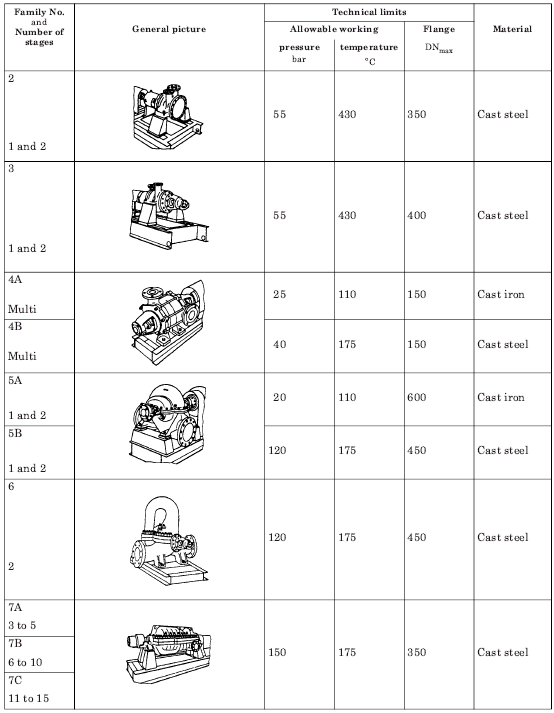
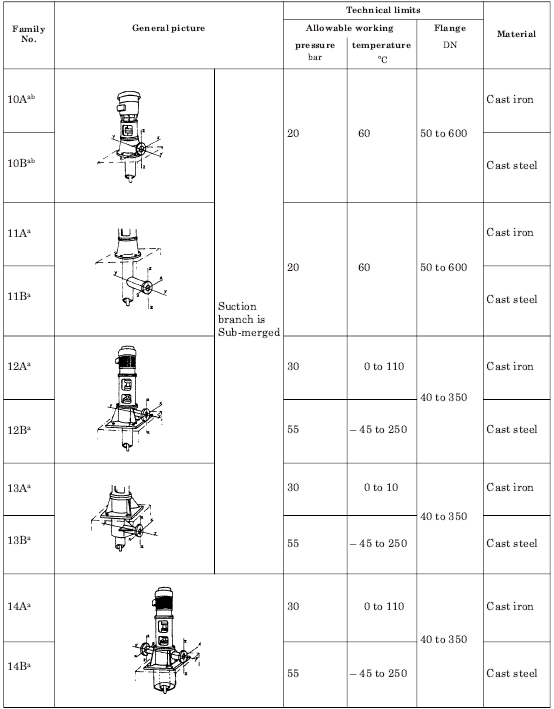
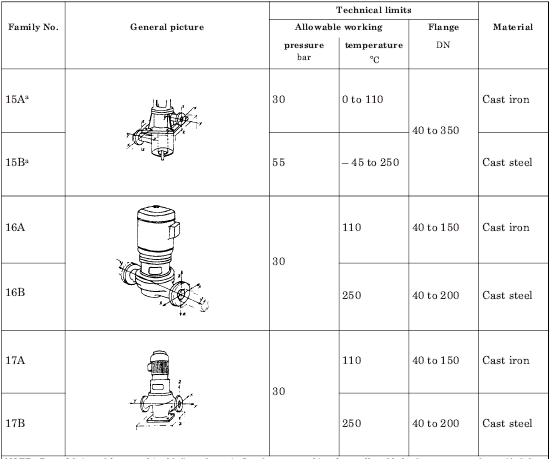
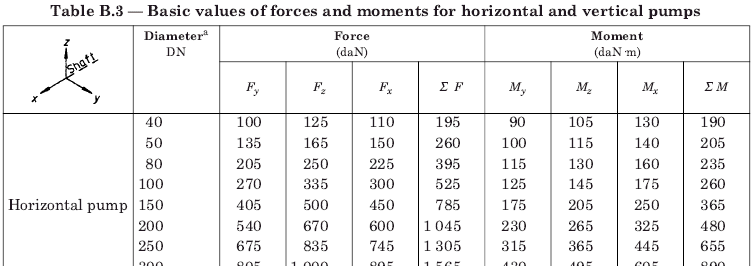
Allowable loads reference Table B.3 of ISO 5199.
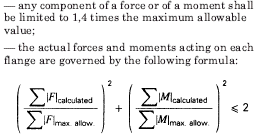
START-PROF performs additional verification per section B.4.2.
To insert a pump: Select target node, then use Insert > Equipment > Pump ISO 9905
 button.