Learn more about PASS/START-PROF Pipe Stress Analysis Software

Above-ground piping requires longitudinal stability verification under axial weight and pressure loads.
Pressure thrust forces in expansion joints can cause piping instability. Install guide supports to prevent buckling. Tall risers may also experience buckling under self-weight.
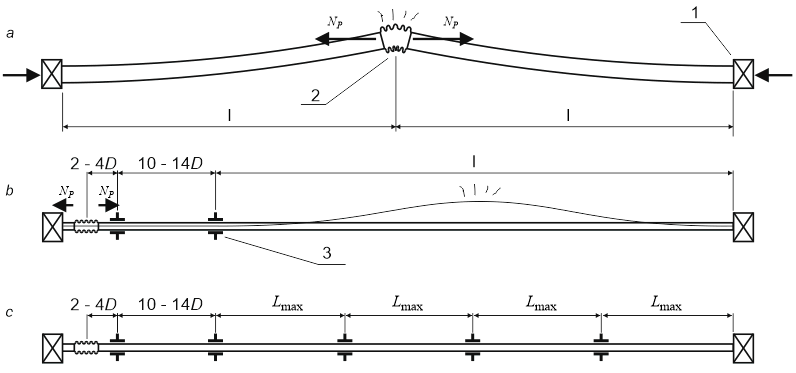
1 - Fixed Anchor, 2 - Axial Bellows, 3 - Guide Support
Also verify longitudinal stability from thermal expansion axial forces. While less critical than weight and pressure loads, these forces can induce additional flange bending and piping deformation.


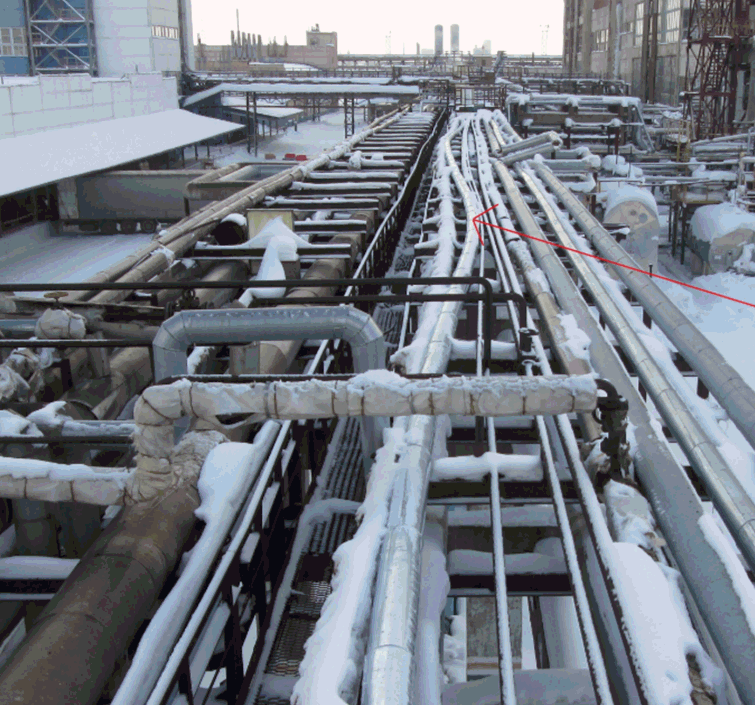
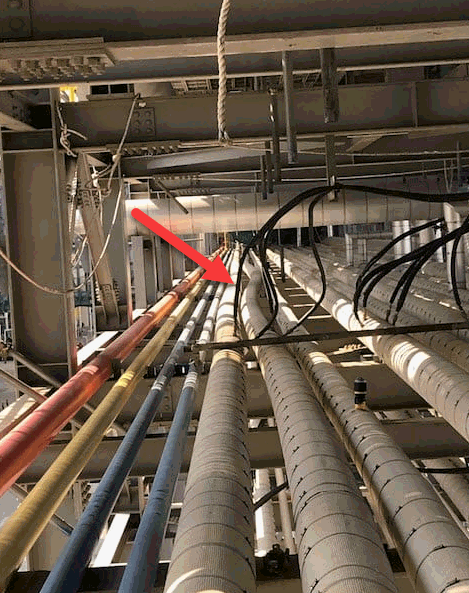

In long gas and oil transmission pipelines, instability can manifest as pipeline arching.
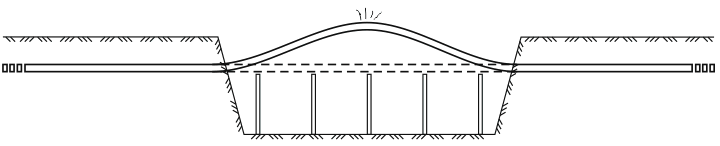
Stability analysis for straight above-ground pipes on sliding supports follows GOST R 55596-2013, RD 10-400-01, and SNiP 2.05.06-85. Essential for small diameter pipelines bundled with larger lines. Optional for other standards. Specify stability safety factor.
This analysis calculates either required guide support spacing or allowable axial compression force.



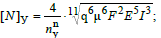

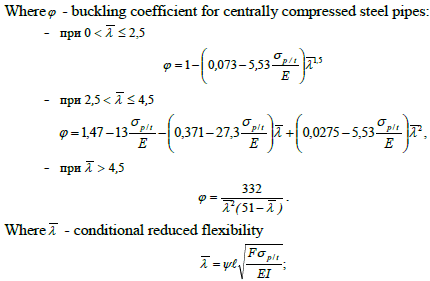
 - Support
spacing
- Support
spacing
 - Effective
length factor
- Effective
length factor
Maximum pipe deflection from thermal expansion:

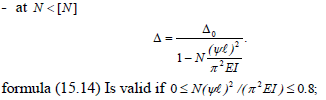
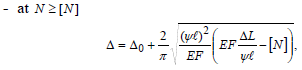
 - Initial
deflection
- Initial
deflection
 - Pipeline
thermal expansion
- Pipeline
thermal expansion
Copy
input data using  and
paste into other PASS/START-PROF analyses using
and
paste into other PASS/START-PROF analyses using  .
.
Property |
Description |
External diameter, D |
Pipe outside diameter |
Pipe wall thickness, S |
Nominal wall thickness |
Operation pressure, P |
Operating pressure in operating condition. More... |
Uniform pipe weight |
Uniform pipe and equipment weight. More... |
Uniform insulation weight |
Uniform insulation weight. More... |
Uniform product weight |
Uniform fluid content weight. More... |
Resting support friction factor, μ |
Friction coefficient range: 0.1 to 0.4 |
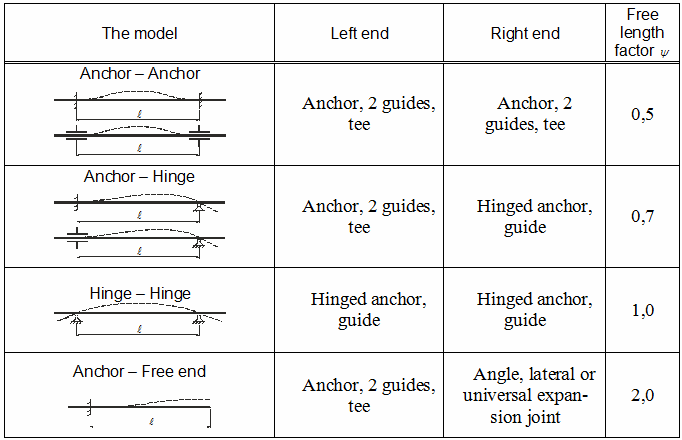
Free length factor |
|
Steel grade |
Pipe material from the materials database |
Spacing between guiding supports, Lcr |
Maximum guide support spacing meeting stability requirements |
Axial compression force, N |
Critical axial force
|
Pipe. Above-ground > Stability Analysis