Learn more about PASS/START-PROF pipe stress analysis software
Cold springing axial expansion joints increases their allowable axial displacement capacity. This method has minimal impact on fixed anchor loads and system stresses because the expansion joint flexibility significantly exceeds that of the connected piping.
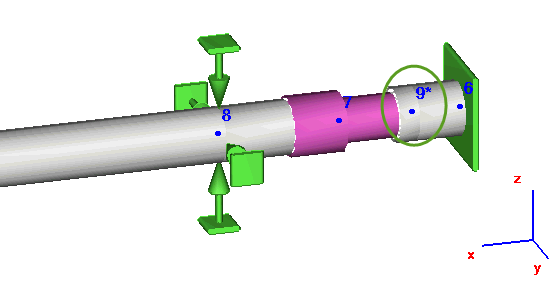
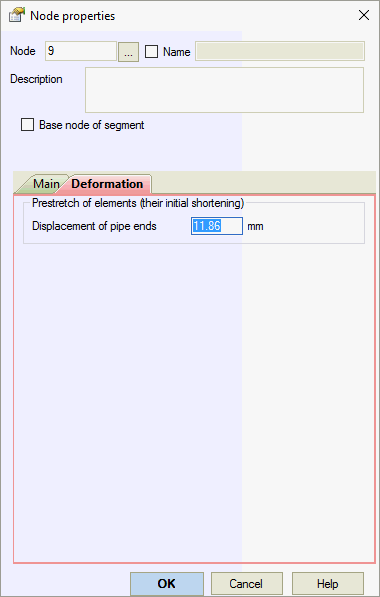
To model axial expansion joint cold springing:
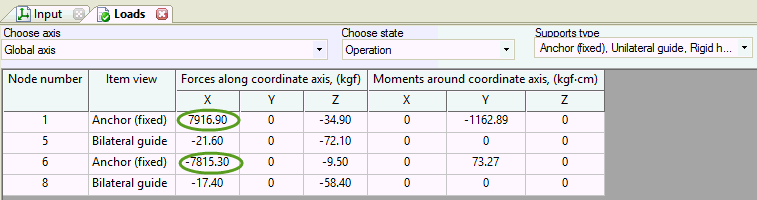
The following analysis results show the system behavior without cold spring applied.
Example project file: ColdSpringAxialExpJoint.ctp

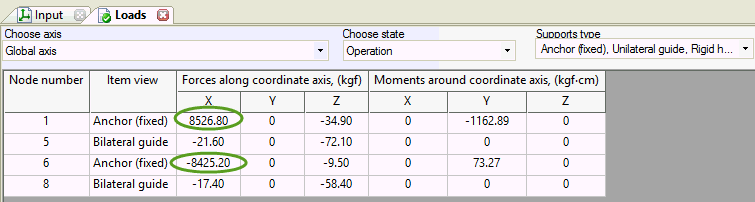

Applying 50% cold spring (23.73 mm × 50% = 11.86 mm) produces slightly different anchor loads and an expansion joint deformation of 11.96 mm. The 0.09 mm difference (11.96 - 11.87) results from straight pipe deformations (elements 1-6) and friction effects.
For precise results, adjust the cold spring value to 11.95 mm instead of 11.86 mm. This compensation accounts for straight pipe deformations and friction force influences.