
Apply correct boundary conditions when modeling main pipeline stations: valve stations, pig launchers, pump and compressor stations. While fixed anchors work for above-ground piping, they are insufficient for buried main pipelines. Incorrect pig launcher station model shown below.
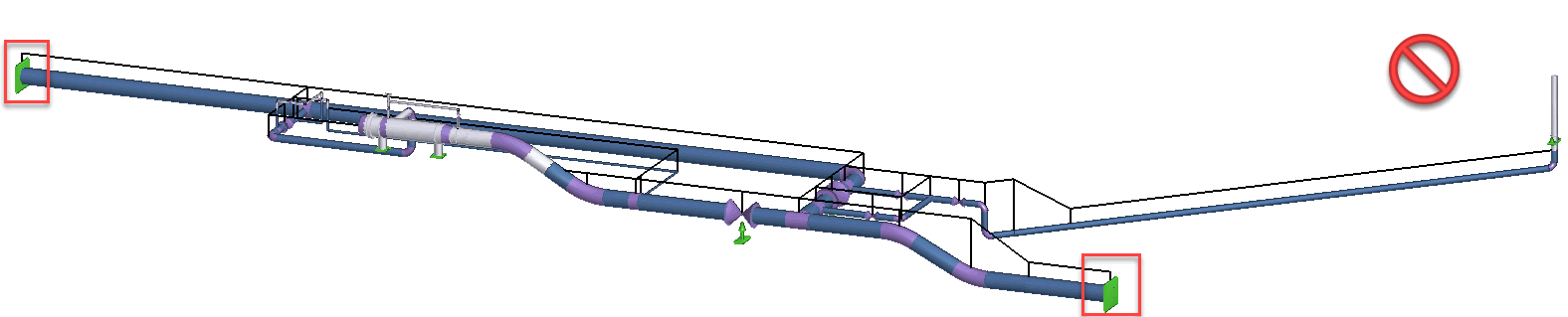
Fixed anchors provide inadequate safety margins for very long buried pipelines. Even small temperature differences (10-40°C) between installation and operation can cause up to 100 mm expansion due to pipeline length. Such displacements can damage station piping.
Correctly model temperature expansion by including main pipeline sections longer than La (sliding zone length, also called virtual anchor length). Pipe moves axially in the sliding zone but remains stationary in the restrained zone. Maximum displacement umax becomes constant for pipeline lengths exceeding La.
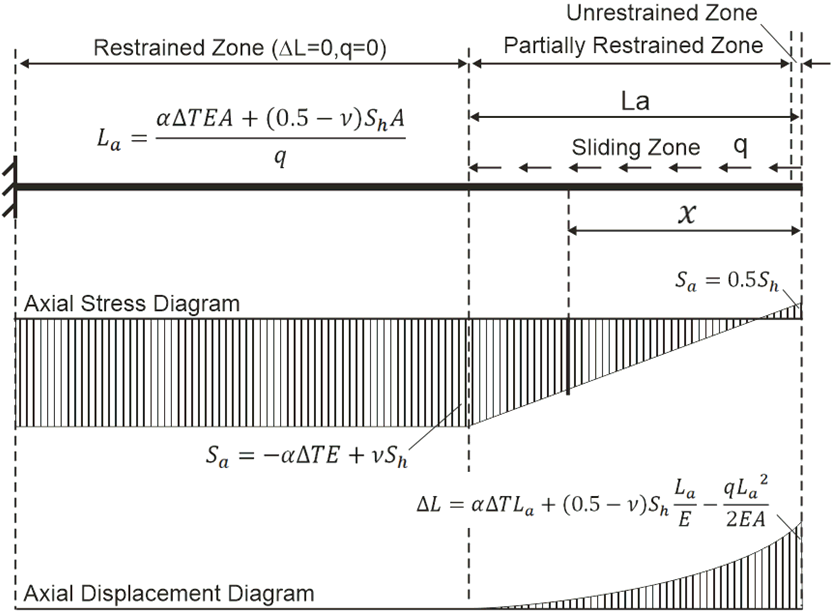
Model main pipeline temperature expansion correctly by adding pipe sections longer than La (see below).

Determine La value using:
Select pipe length by starting with an initial length (e.g., 100 m). Run analysis and check stresses or support loads. Increase pipe length (e.g., to 150 m) and re-analyze. If stresses or support loads increase, continue lengthening pipe until results stabilize between analyses, indicating pipe length exceeds La.
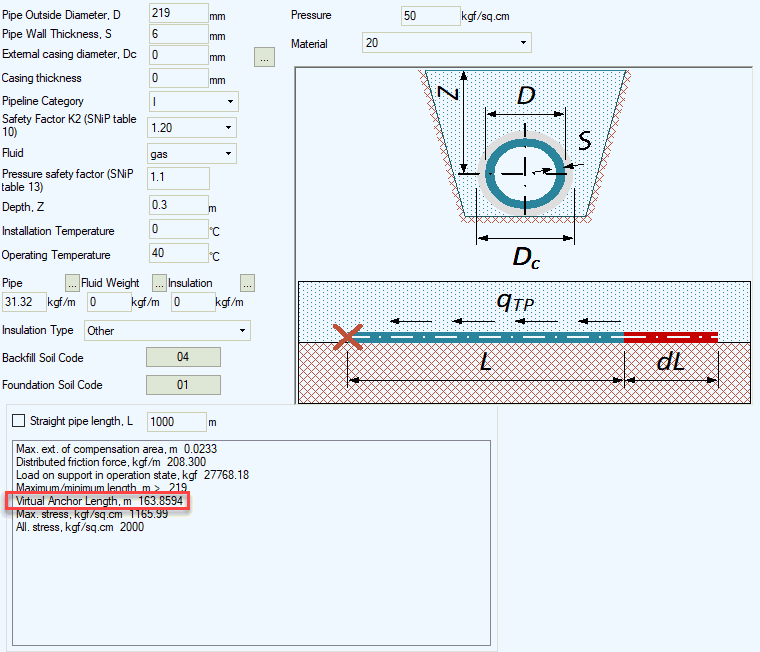
Virtual anchor length (sliding zone length) calculation in Start-Elements:
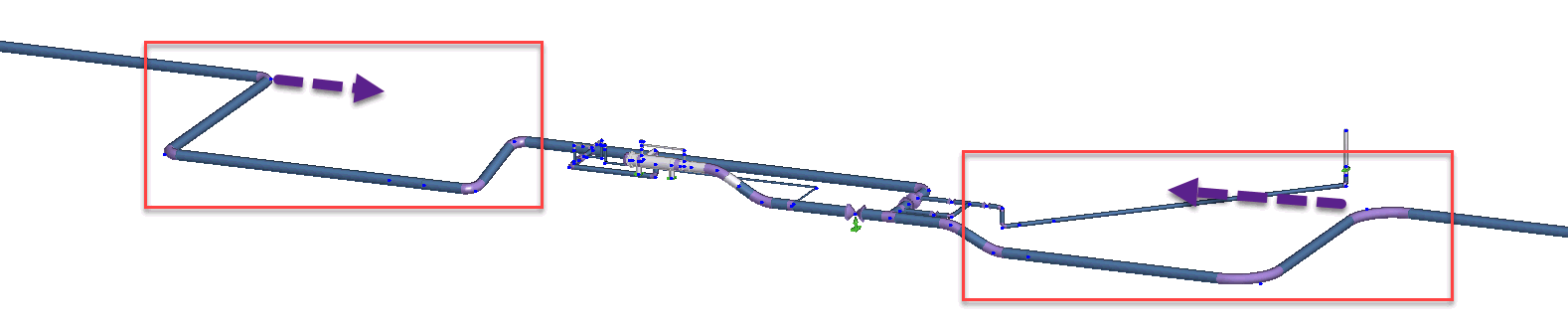
After creating the correct model, add U-, Z-, or L-shape pipe loops to compensate for connected main pipeline temperature expansion (shown by dotted arrow below).
See also: Restrained and Unrestrained Zones of Buried Pipelines